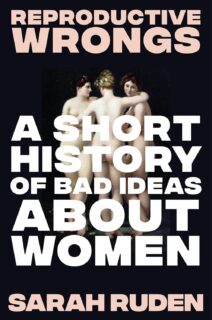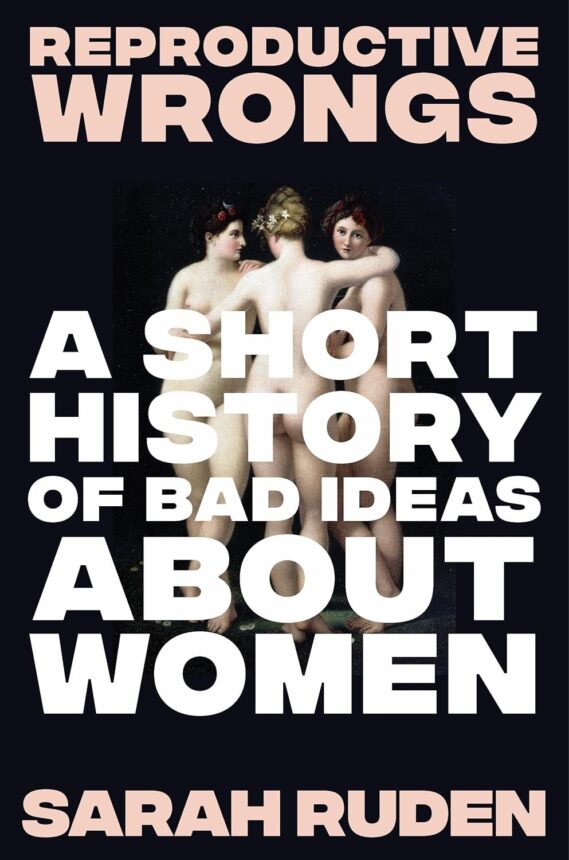
Reproductive Wrongs
A Short History of Bad Ideas About Women
A bracing feminist chronicle of the history of the West told through seven texts, exposing where our most virulent ideas about women came from.
The dangerous belief that granting women reproductive freedom poses a threat to “traditional” values is a myth that has long prospered in American politics, playing an especially vicious role in the development of totalitarianism in the West. How did such damaging ideas arise?
In Reproductive Wrongs, acclaimed translator and cultural historian Sarah Ruden exposes how ideologies that oppress women and families in the service of power took hold. Ruden traces a sweeping history through her trenchant analysis of seven pieces of literature that, she argues, marked key inflection points across two thousand years. From propagandistic poetry written by Ovid in the early Roman Empire to the biography of an evangelical American “abortion survivor,” Ruden lays bare how doctrines of control over women were invented and propagated.
Scathing and vital, Reproductive Wrongs unearths the evolution of a right–wing radicalism that endures to this day, when half of the US population is losing access to basic human rights.
“A timeless treatise…” – Kirkus
“Expansive . . . the book’s greatest strength lies in Ruden’s wry criticism . . . a biting, revelatory overview of misogyny’s long literary history.” — Publishers Weekly
“[This poem written around 18 BCE] seeks to dissolve the difference between the abortion of semidivine fetuses who will be born to further the divinely decreed destiny of Rome, and the abortion of sex-workers’ fetuses who would be born outside of patriarchal homes and face very uncertain prospects. Ovid’s judgment is blindingly sweeping, if not ridiculous, a fitting ancestor to modern religious conservatives’ billing of abortion as the super-crime, a crime like genocide (to which in fact it is often explicitly compared), a crime for which no plea of necessity (which applies when an individual commits a criminal act in order to prevent a greater harm from happening) can ever be admitted.”
“The facts suggest that sidelining the household and the nuclear family [in late antiquity] was not the church’s best idea. Violence, ignorance, disorganization, squalor, and the collapse of useful rules in favor of superstitious rituals were the main ingredients of Dark Age dystopia. Without women able to stand in the way with their traditional authority rooted in the sovereign household, Europe took on the culture of a frat house, with men working things out on their own the way they tend to work things out on their own.”
books by Sarah Ruden